

Most book covers cost somewhere between £50 and £2,500, and the gap comes down to one thing: how much of the artwork is made from scratch for your book. This guide explains what each price level usually buys, what a fair package includes, and how to spot a quote that will cause trouble later.
Typical price ranges
These are broad market ranges for independent authors, not Credo quotes. Prices vary by country, designer and genre, so treat them as a way to judge whether an offer is realistic.
| Type of cover | Typical range | What you usually get | Suits |
|---|---|---|---|
| Premade | £40 to £150 | A finished design with your title and name added. Often sold once, but the artwork was not made for your book. | Tight budgets, fast launches |
| Custom, photo or type based | £250 to £800 | A design made for your book from licensed images and carefully chosen lettering. | Most fiction and non-fiction |
| Custom illustrated or complex | £600 to £2,500 or more | Original illustration or heavy compositing, often with series branding. | Fantasy, children’s books, premium titles |
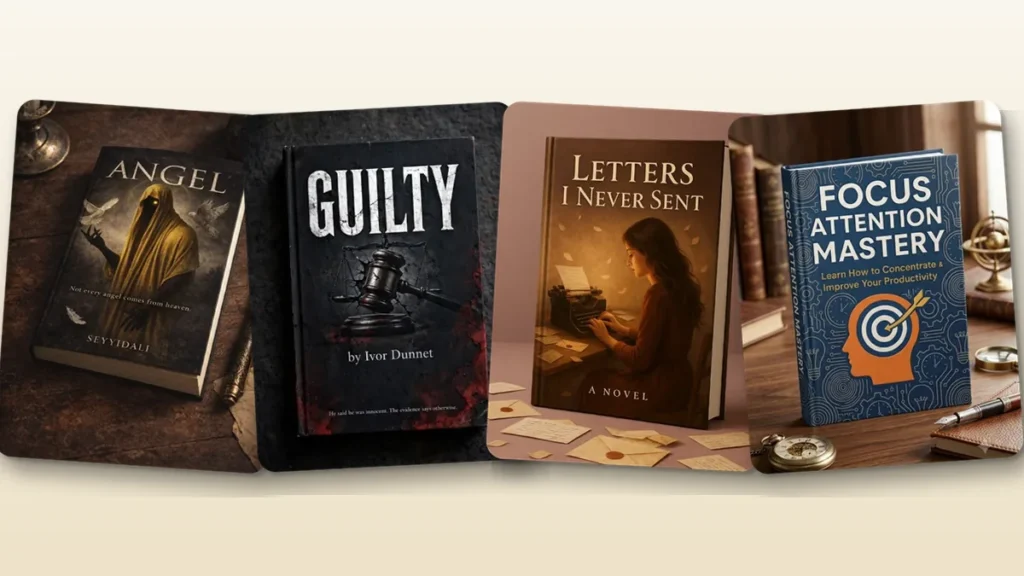
A full wrap, which adds the spine and back cover, usually costs a little more than a front cover alone. If your book will be printed at all, you need the wrap, so ask for it in the first quote and not as a surprise extra.
What changes the price
- Front cover only or full wrap. The wrap needs a spine width worked out from your page count and paper, plus a back cover layout and barcode space.
- Original illustration or licensed images. Drawing or painting from scratch takes days. Licensing a photograph takes minutes, and the licence itself may cost a few pounds to a few tens of pounds per image.
- Revision rounds. Some designers include two rounds, others include as many as it takes. Know which before you start.
- A series. Designing a system that works across several books costs more at the start and saves money on every book after.
- Formats. Print, ebook and audiobook each need a different shape of the same artwork.
- Speed. Rush work usually carries a premium.
What a proper cover package includes
Whatever the price, a cover that is ready to publish should come with:
- A print-ready wrap with the spine width calculated for your page count and paper stock.
- A bleed of about 3 mm around the edge, which printers need so no white line shows after trimming.
- Space for the ISBN barcode on the back cover, in the right size and position.
- An ebook cover as a separate RGB image, usually about 1600 by 2560 pixels.
- The licence details for every image and font used, so you know what you are allowed to do with the artwork.
- The source files, or a clear agreement about whether you will receive them.
Why very cheap covers cause trouble
A low price is not always a problem, but these are the usual ways it becomes one:
- The same image appears on other books. Stock photographs are used again and again, and readers notice.
- The licence does not cover your use. Some image licences exclude books for sale, or cap the number of copies.
- The spine is wrong. If it is guessed instead of calculated, text can wrap onto the back cover once the book is printed.
- The cover fails at thumbnail size. Most readers first see your book as an image about 100 pixels wide. Fine detail and thin lettering vanish at that size.
- No source files. Fixing a typo later means paying again.
How to brief a designer
A clear brief shortens the process and cuts the number of revisions you pay for. Send:
- The exact title, subtitle and author name, spelled as they should appear.
- The genre, and two or three recent bestsellers in the same category. These are called comparable titles.
- Who the book is for, and the feeling it should give at a glance.
- Page count and trim size, if you know them.
- Back-cover copy, if it is written.
- Covers you like and covers you dislike, with a sentence on why.
Questions to ask before you hire
- Is the quote for a front cover or a full wrap?
- How many concepts will I see, and how many revision rounds are included?
- Will the artwork be original, or built on stock images? If stock, who holds the licence?
- Will you test the design at thumbnail size?
- What files do I receive, and in which formats?
- What happens if I need a small change in a year?
So how much should you spend?
Your cover is the sales page for your book, so the budget should be in proportion to what the book needs to do. A first novel in a crowded genre usually benefits from the custom tier. A short non-fiction guide for an existing audience may do well with a simpler design. Spending more does not guarantee sales, and no designer can promise them. What a good cover does is stop you losing readers for avoidable reasons.
If you would like a firm figure for your own book, see our book cover design service or look through recent projects. If you are still choosing how to print and distribute, our guide to KDP and IngramSpark explains how those choices affect the files your cover designer needs to prepare.